The technology landscape is currently undergoing a profound shift, moving away from the centralized paradigm of hyperscale cloud data centers toward a more distributed and decentralized model. At the forefront of this transformation is the emergence of Micro Cloud architectures, a concept rapidly gaining traction for its potential to revolutionize how we process data and deliver services at the network's edge. This is not merely an incremental improvement but a fundamental rethinking of cloud infrastructure, designed to meet the stringent demands of latency, bandwidth, autonomy, and data sovereignty that traditional cloud models often struggle with.
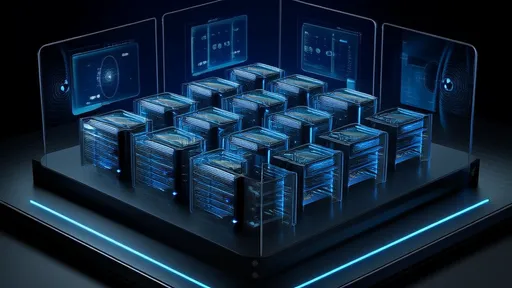
The core premise of a Micro Cloud is the deployment of a small-scale, self-contained cloud computing infrastructure physically close to where data is generated and consumed—the edge. Unlike a simple edge device or gateway, a Micro Cloud is a fully functional, albeit miniaturized, cloud stack. It typically integrates compute, storage, and networking resources into a single, ruggedized hardware appliance, capable of operating independently or with minimal connection to a central cloud. This architecture empowers organizations to run applications and process data locally, delivering near-instantaneous responses and avoiding the latency penalties inherent in backhauling data over long distances to a remote data center.
Driving this architectural evolution are several powerful, interconnected forces. The explosive growth of the Internet of Things (IoT) is flooding networks with unprecedented volumes of data from sensors, cameras, and smart devices. Transmitting all this raw data to a central cloud for analysis is often impractical, expensive, and slow. Furthermore, the rise of real-time applications—from autonomous vehicles and industrial robotics to augmented reality—imposes strict latency requirements measured in milliseconds, which only local processing can satisfy. Data privacy and residency regulations, such as GDPR, also compel businesses to keep sensitive information within specific geographical boundaries, a task for which the distributed nature of Micro Clouds is perfectly suited.
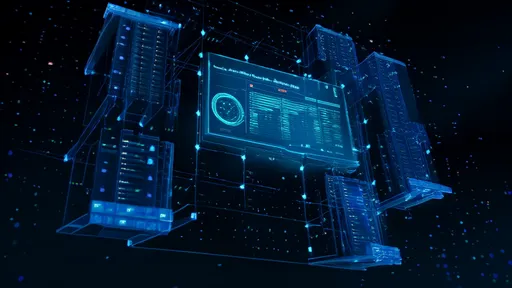
The architecture of a typical Micro Cloud is a marvel of modern engineering, packing powerful capabilities into a compact form factor. At its heart lies a virtualization layer, often leveraging lightweight container technologies like Docker or managed orchestration platforms such as K3s (a lightweight Kubernetes distribution). This allows for the seamless deployment and management of complex applications using modern DevOps practices. The hardware itself is designed for resilience, capable of operating in harsh environments—be it a factory floor, a retail store, a smart agriculture field, or a remote telecommunications site. These nodes are not isolated; they can form clusters to provide high availability and scale-out capacity, creating a resilient mesh of computing power at the edge.
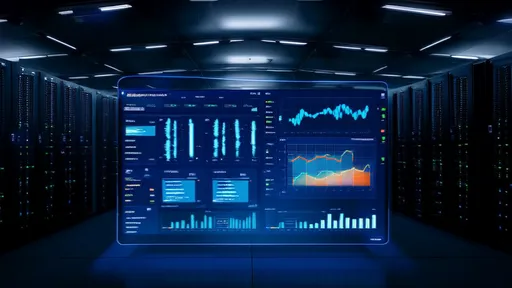
A critical differentiator for Micro Clouds is their operational model. They are designed for zero-touch provisioning and remote management, enabling central IT teams to deploy, monitor, update, and secure a vast fleet of distributed edge nodes as if they were a single, logical entity. This manageability is crucial for overcoming the traditional operational challenges associated with distributed infrastructure. The relationship with the central cloud evolves from one of dependency to one of synergy. Micro Clouds act as intelligent data filters, processing vast datasets locally and only sending valuable insights, aggregated metadata, or exception events upstream to the central cloud for deeper analysis, long-term storage, or global coordination. This hybrid approach creates a powerful, tiered computing model.
The practical applications of this architecture are vast and transformative. In manufacturing, a Micro Cloud on the factory floor can process video feeds from quality control cameras in real time, instantly identifying defects on the production line without a millisecond of delay. In smart cities, traffic management systems powered by local Micro Clouds can analyze vehicle and pedestrian flow from numerous intersections, optimizing traffic light patterns in real time to reduce congestion. For retail, in-store Micro Clouds can power personalized customer experiences, manage inventory through real-time analytics, and process transactions with unwavering reliability, even if the store's internet connection is temporarily lost.
However, the path to a mature edge computing ecosystem is not without its hurdles. Security takes on a new dimension at the edge, moving from a fortified central data center to thousands of physically exposed nodes. This demands a robust security model encompassing secure boot, hardware-based trust, encrypted storage, zero-trust network policies, and consistent, automated patch management. The sheer scale of deployment also presents logistical challenges in hardware lifecycle management, from initial shipping and installation to maintenance and eventual decommissioning. Ensuring consistent performance and resilience across diverse and sometimes unreliable network conditions remains a key focus area for developers and operators alike.
Looking ahead, the trajectory for Micro Cloud architectures is one of accelerated adoption and increasing sophistication. We can anticipate tighter integration with 5G and future network technologies, where Micro Clouds will be deployed directly within telecom operators' networks, bringing computational resources closer than ever to end-users. The convergence of Artificial Intelligence and edge computing will also deepen, with more AI inference and even training workloads being distributed across these edge nodes. As the technology matures, standardization of APIs and management frameworks will be essential to ensure interoperability and prevent vendor lock-in, fostering a healthy and innovative ecosystem.
In conclusion, the move toward Micro Cloud architectures represents a significant and necessary evolution in cloud computing. It is a direct response to the limitations of a purely centralized model in a world that is increasingly real-time, data-intensive, and geographically distributed. By bringing cloud capabilities to the edge, organizations can unlock new levels of efficiency, enable groundbreaking applications, and maintain control over their data. While challenges in security and management persist, the ongoing innovation in this space promises to overcome these barriers, solidifying the Micro Cloud not as a niche solution, but as an indispensable component of the modern, hybrid cloud infrastructure.
By /Aug 26, 2025
By /Aug 26, 2025

By /Aug 26, 2025

By /Aug 26, 2025

By /Aug 26, 2025

By /Aug 26, 2025
By /Aug 26, 2025
By /Aug 26, 2025

By /Aug 26, 2025

By /Aug 26, 2025

By /Aug 26, 2025
By /Aug 26, 2025
By /Aug 26, 2025

By /Aug 26, 2025

By /Aug 26, 2025

By /Aug 26, 2025

By /Aug 26, 2025

By /Aug 26, 2025

By /Aug 26, 2025

By /Aug 26, 2025
